

How did frost in the attic get there??!
Frost in the attic, is that really a thing? The answer is yes. As a homeowner, it can be very confusing to see frost in your attic and wonder what it is from. Some of the biggest questions I get are what is attic frost, why is it in my attic, and what needs to be done to fix it? Overall, Attic Frost is no good for anyone’s home.
The first signs of an issue in the attic can be ice dams, or a buildup of ice on your roof and the eaves troughs.

Today, we’re going to focus on frost in the attic, what causes it, and how to fix it.
Is frost dangerous for my home?
A small amount of frost in your attic shouldn’t be an issue. If it accumulates, however, it can cause water damage in your home. In your attic space alone, excess moisture can damage insulation and lead to roof deterioration. It can over time soften the plywood and cause your roof to look “wavy” Example photo given below. If the moisture trickles back down through your ceiling, it could manifest in the form of stains, mold, or mildew. If you notice a moisture problem in your home, address it as soon as possible. As you know, water in the home can cause serious harm to drywall, paint, furniture, and more. If it is anywhere other than the sink, toilet, tub or washer, it is going to cause problems.

Example of wavy roof
1. Seal Air Leaks
The first step, take what the inspector tells you seriously. you should take is to seal any air leaks to prevent warm air from seeping into your attic space. A infrared camera is recommend for this. By keeping the warm air down in your living area, you’ll not only prevent moisture buildup in the attic, but you’ll also reduce energy waste. Seal all leaks—large and small—by filling in any holes or crevices in the attic floor, around plumbing pipes, near the chimney, and around light fixtures. This can be a difficult task since some air leaks are small and hard to pinpoint; some might also be located under insulation. Hire a professional to do the job for you, if necessary.

An example of infrared photo, dark colours being exterior air coming into home because it’s not properly sealed
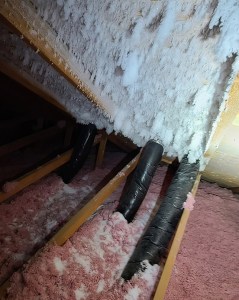
Example photo of air leaking from the interior around the pipes
Caution: Never disturb insulation containing asbestos
If you have asbestos in your attic, don’t touch it; leave the job to professionals.
2.Reduce Indoor Humidity Levels
The easiest thing you can do to reduce humidity levels in your home is to turn off your humidifiers. While a humidifier may make your home more comfortable for you during the winter, doing without it could save you a lot of money and heartache in the long run. As whole-home humidifiers rise in popularity in modern homes, so do serious moisture-related problems. Newer homes are sealed tighter than older drafty homes, which creates more humidity buildup inside. A basement moisture problem can also lead to frost formation in the attic, so making sure your basement stays dry might just fix your attic issue.
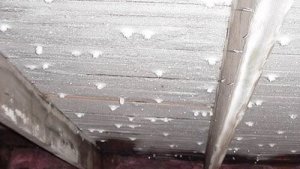
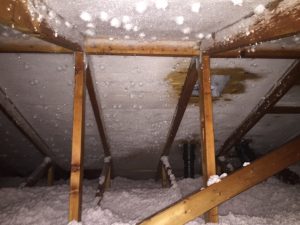
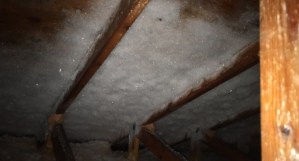
Examples:From light fixtures, allowing interior hot air to leak into the attic. Causing large amounts of frost.
Another way to reduce indoor humidity levels is to make sure all exhaust vents lead outdoors rather than into another part of your home or the attic. If they don’t, reroute them. Run your bathroom exhaust fan for up to 20 minutes after showering or bathing, and use your kitchen exhaust fan while cooking and baking to remove excess moisture from the home.

In this home theres too much humidity leaking, not properly insulated or sealed.
3.Ventilate the Attic
While you’re up in the attic sealing air leaks, make sure insulation isn’t blocking any soffits or roofing system. A good ventilation system will increase airflow by allowing a cool, dry breeze to flow through the attic space to help reduce moisture and frost accumulation.
If you have frost forming in your attic and need help implementing any of the tips I listed above, contact a professional. You may already have an adequate amount of insulation and simply need to improve your ventilation system, or maybe your ventilation is sufficient but you need someone to seal air leaks in your attic. If a contractor performs an inspection and says you don’t need either of these, you may simply need to cut back on the amount of moisture you’re adding to your home in the winter.
Let Bent Nails help you this winter, the infrared imaging is included with every inspection. Your safety and ease of mind is my #1 concern!